
Excel files
Stock quantities live in separate sheets that need constant manual reconciliation.
Portfolio/stock.Arlequinapp
stock.Arlequinapp restructures inventory management into a continuous system where entries, consumption, reservations and traceability stay connected.
This project was designed for a real paper production client. Their team relied on spreadsheets, emails and manual updates to track stock, creating fragmented workflows and constant uncertainty.
Excel files
Stock quantities live in separate sheets that need constant manual reconciliation.
Emails
Requests, changes and confirmations are scattered across conversations.
Manual updates
Availability depends on people remembering to update the right place at the right time.
Lack of traceability
It becomes difficult to understand where material comes from, where it goes and why it changed.

ARLEQUIN

Primary user
Arlequin is a printing company focused on book production, coordinating stock across suppliers, projects and delivery deadlines.
Arlequin needs a reliable way to manage both company-owned stock and customer-owned stock, monitor availability and consumption, and reduce operational uncertainty across teams.
Context
Book production runs across multiple jobs, deadlines and material requirements at the same time.
Responsibility
Track both company-owned stock and customer-owned stock without interrupting production.
Daily friction
Information is distributed across spreadsheets, emails and manual updates.
Real issue
There is no centralized and reliable operational system.
Information exists, but it is distributed across formats, tools and individual habits.
Teams spend too much effort rebuilding context before they can make a decision.
Entries, consumption and reservations lose meaning when they cannot be connected to a complete history.
The system depends on who remembers what, instead of making the process reliable by design.
Production decisions become slower and riskier when availability is not clearly structured.
Control doesn't come from more data. It comes from clarity.
The goal is not to collect information, but to structure it in a way that enables fast and reliable decisions.
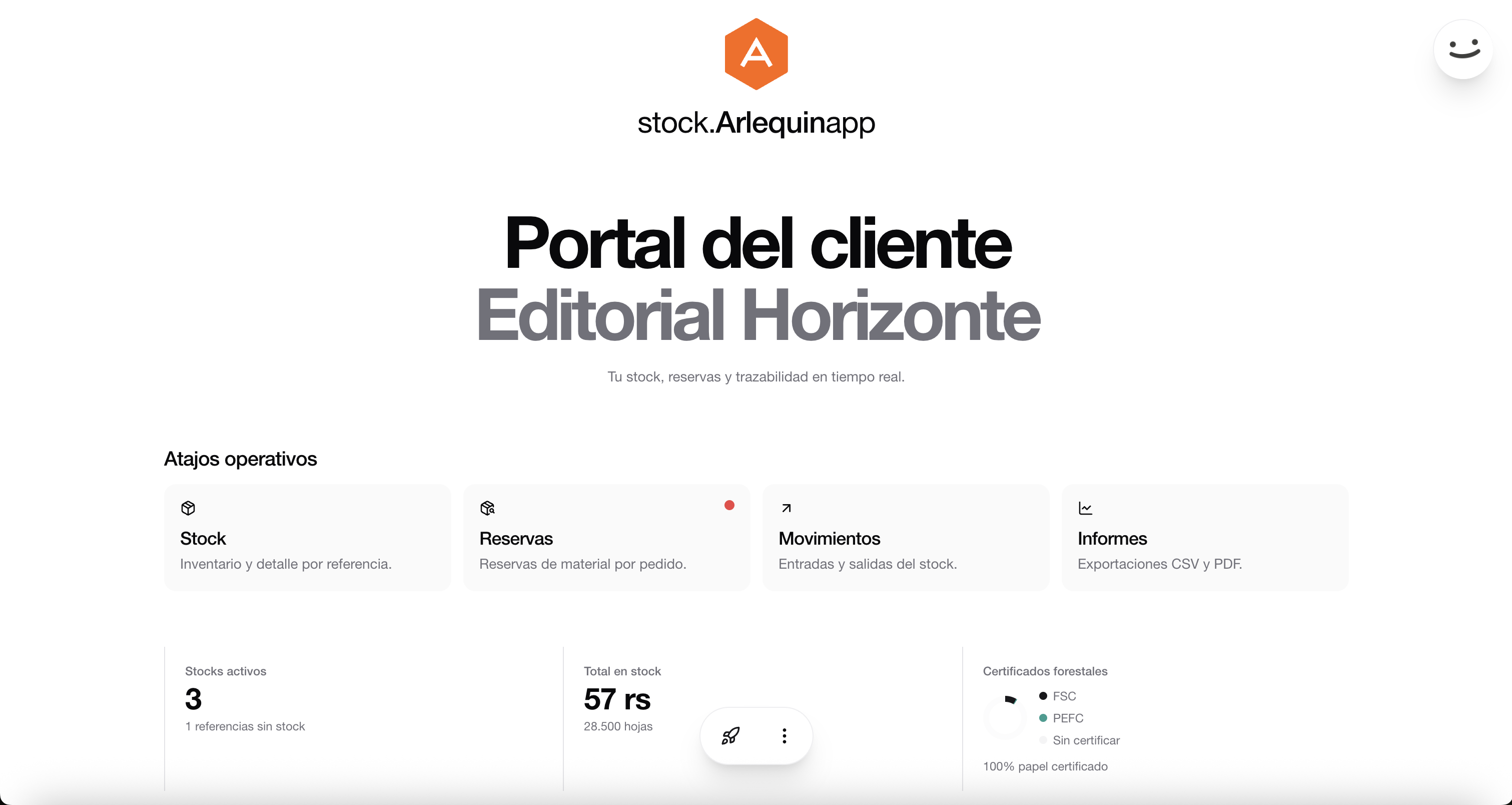
The application restructures stock management into a unified flow where every entry, movement and reservation is tracked and connected. It also makes traceability usable in day-to-day operations, so EUDR, PEFC and FSC information stays attached to the material instead of living in separate documents.
Module 01
Register incoming materials with full traceability.
Track origin, supplier and specifications.
Centralized data entry.
Immediate system availability.
Module 02
Monitor how stock is used across projects.
Real-time updates.
Automatic deductions.
Clear visibility of usage.
Module 03
Secure materials for upcoming production.
Prevent conflicts between projects.
Plan ahead with confidence.
Reduce uncertainty.
Module 04
Understand where every unit comes from, where it goes and how it complies.
Full lifecycle tracking.
Historical records tied to EUDR, PEFC and FSC requirements.
Accountability across processes and certifications.
Information is structured to prioritize what matters in each moment.
Actions are designed to be executed quickly, without unnecessary steps.
The interface follows the logic of the workflow, not isolated features.
Each screen focuses on a single task, avoiding overload.
It transforms fragmented workflows into a continuous, structured process that supports decision-making in real time.
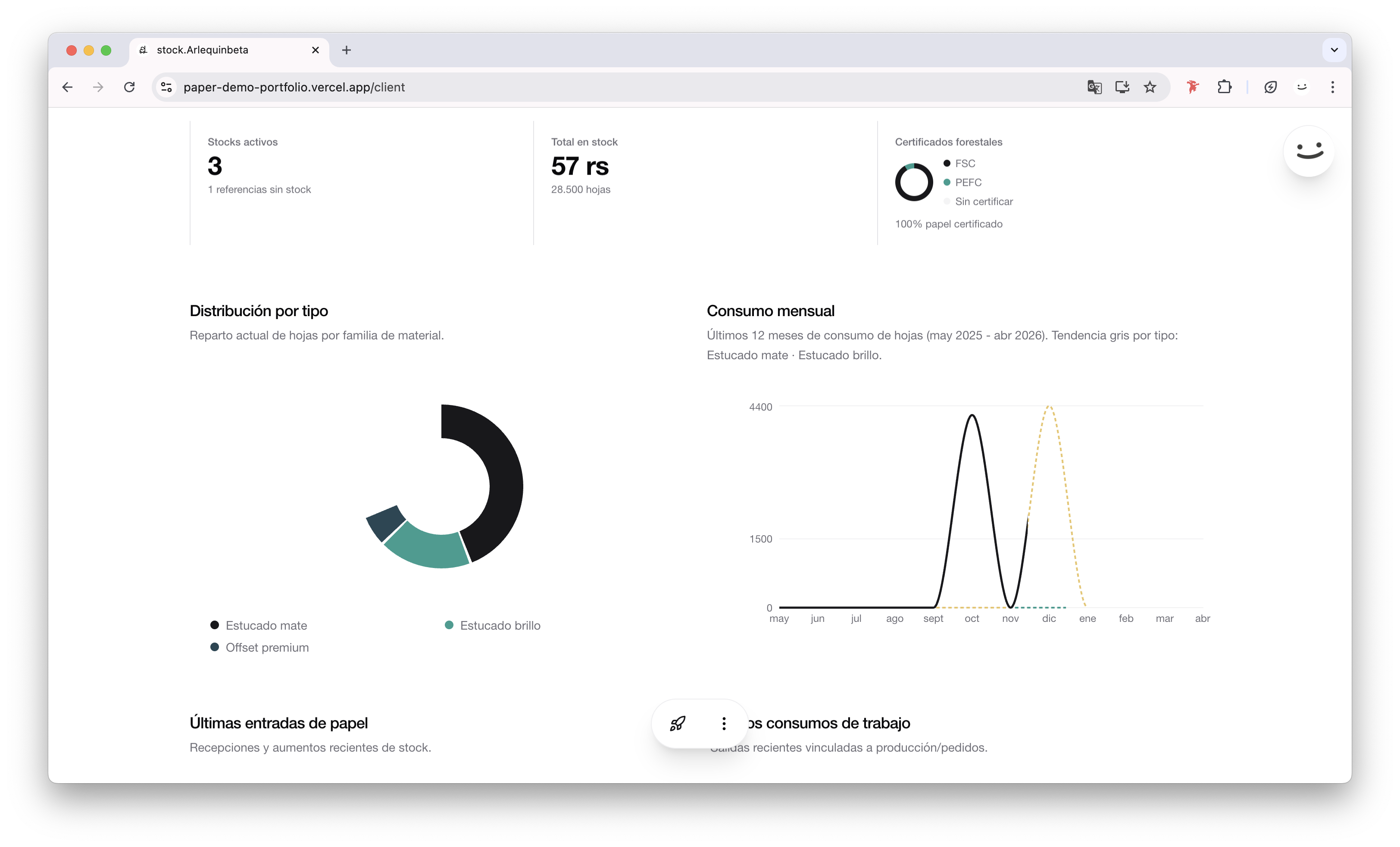
Reduced manual errors.
Faster decision-making.
Improved coordination with suppliers.
Centralized and reliable information.
A closer look at dashboard, stock, detail, movements and reservations.